Jordanian shopkeeper now helps protect Petra
The Art Newspaper
August 15, 2014
© Unesco
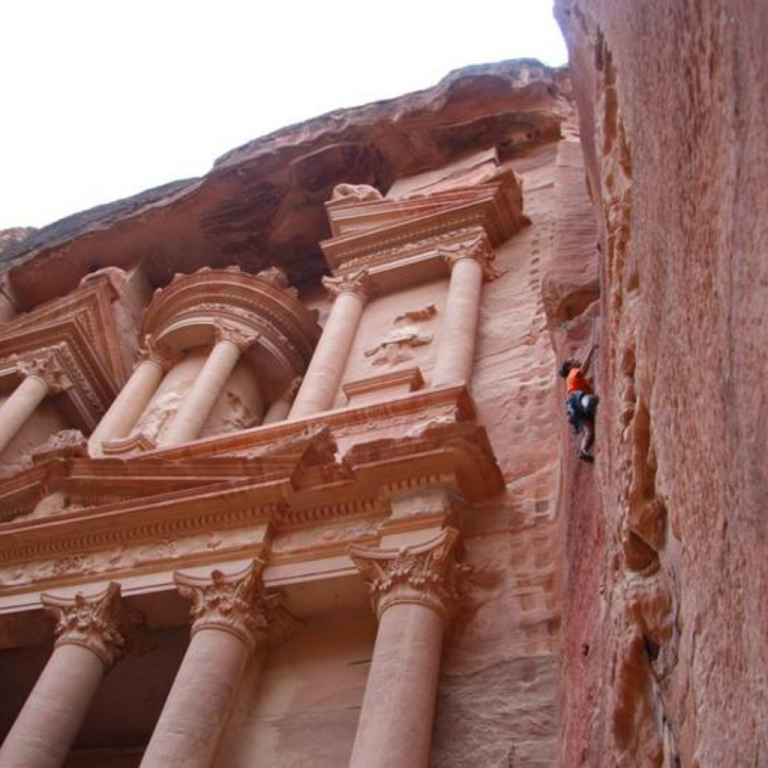
A Unesco project has trained locals to monitor cracks in the ancient site’s stone face.
A former shopkeeper in Jordan is now using his rock climbing skills to help preserve the ancient site of Petra, thanks to a Unesco project.
The Siq Stability Project—which has trained locals to help monitors the gorge that runs through Petra—has had a life-changing impact on Ataf Al Fager of the Bedouin village Um Sayhoun, next to Petra.
While he previously sold souvenirs to tourists, Al Fager has now been trained in rock climbing techniques, allowing him to monitor the optical prisms installed on the rock face, used as reflectors by surveyors. In six of Petra’s most hazardous spots, he also checks equipment that wirelessly collects data on cracks in the rock face, and photographs any changes that he notices in the environment, sending his images to the Petra Archaeological Park and Unesco’s office in Amman.
At the same time, he has been raising awareness about the prisms among local people, who used to smash the devices, believing them to be cameras. “If anyone messes with a prism, Bedouins tell Ataf!” he says in a Unesco report.
The gorge is frequently subject to natural hazards, which can lead to the sudden appearance of cracks in the stone and the danger of rock falls. To monitor these changing conditions and identify areas of risk or instability, over the past two years, experts from Unesco installed environmental monitors and undertook laser scanning across the site, collecting the geographic data on a digital platform. Meanwhile, to ensure that the expertise needed to continue the project remained in the country, staff from the University of Cape Town provided training to Jordanian technicians.
Related articles
The Art Newspaper
- Jordan's first 'heritage village' to be completed this year (April 2014)
- Who will save Yemen's heritage? (March 2014)
- Jordan women in archaeology management plan (March 2014)
- Heritage hopefuls renew their bids to Unesco (January 2014)